

Niche ingredients
And all about you!

Today I’m focusing on three of my favourite niche ingredients, kicking off with…
LEMON VERBENA!
I wish this newsletter came with a scratch-and-sniff panel, like a My Little Pony, because the smell of a crushed lemon verbena leaf on a hot day - heaven!
If you don’t already grow it, here’s an excuse to head to your local garden centre: it’s in all decent herb sections now, and shouldn’t be more than £4 per pot. (I’ve seen massive thickets of it growing wild in Greece; sadly mine refuses to spread and dies back every year: am either going to treat it as an annual, or wrap it in a blanket.)
Other than endless cups of fresh lemon verbena tea (am off to brew one now) my favourite thing is to fry the leaves in foaming butter with, say, pine nuts, and then add halved, very good cherry tomatoes, and soften them just for a couple of minutes before stirring through cooked basmati rice - it is the loveliest fried rice, made nicer only with the addition of:
SICHUAN PEPPERCORNS
It’d be silly to call these a niche ingredient given how central they are to Chinese cookery, but I include them here as Sichuan peppercorns aren’t a regular UK supermarket find. (Sometimes you do see a skinny spice jar of them by Bart or similar, but don’t bother buying them, they aren’t quite right. The reddish ones ones in a packet are, to my mind, much nicer.) Head to a Chinese supermarket or buy a packet online from Sous Chef: they have this incredible mouth-numbing sensation and incredible flavour. Less is very much more with these: add too many and your food will be inedible, add the right amount and it is delicious like nothing else on earth. I like to:
fry half a teaspoon of them, whole, with the butter and verbena leaves for the fried rice recipe above
use them in my recipe for Sichuan roast chicken with squash and greens from The Roasting Tin Around the World;
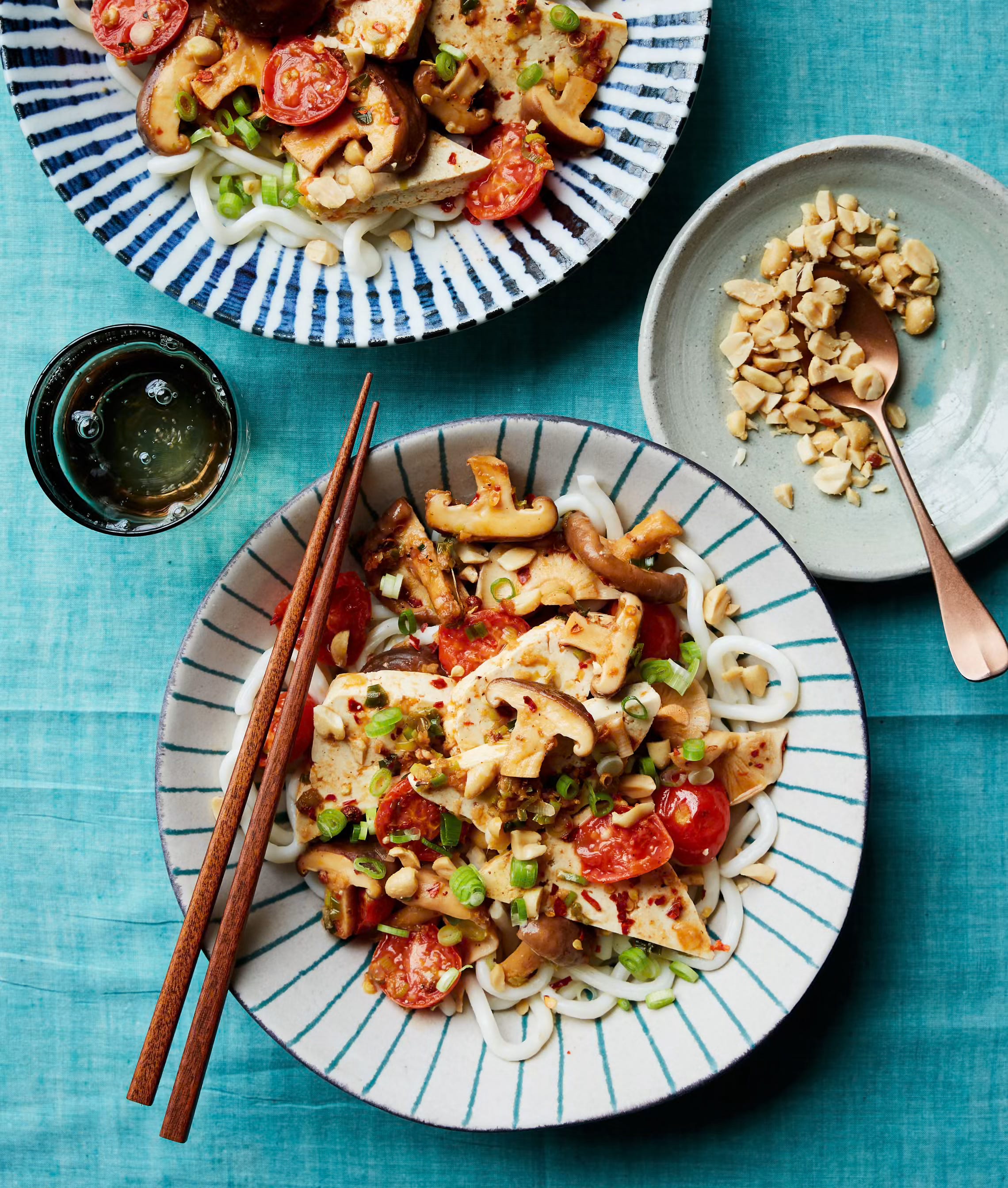
ditto in my Guardian column recipe for salt and Sichuan peppercorn tofu with tomato & mushroom noodles
use them to finish off mapo tofu (this is my Green Cookbook version with mushrooms rather than mince.)
LIQUID IN JARS OF BEANS
After years - years - of carefully rinsing off the gloop that comes with a tin or jar of beans, I realised (and many of you will have got here before me) that the stuff is LIKE LIQUID GOLD. Specifically the stuff which comes in a jar, the thick stuff - I will admit I don’t like the smell of it, but I was making my three bean chilli last week with two jars of beans, rather than three tins, and in a hurry/out of interest, added the gloopy bean stock (sounds delightful) instead of regular stock. Oh. my. god. The resulting chilli was unreal: thick, unctuous - luxuriant - not usually a word one associates with a vegan chilli.
Turns out this is common knowledge and that the impeccable Samin Nosrat has pointed this out on her podcast, so it really is a legit thing to do, also the weird smell completely disappears on cooking.
Please amend your copy of The Green Roasting Tin with: ‘use jarred gloop.’
AND NOW FOR SOMETHING A LITTLE DIFFERENT
I’ve been thinking over how to add value to this newsletter, and it struck me that in order to do that, I need to know a bit more about YOU, my readers. Lots of you have kindly written (I bloody love our comments section here) to say you enjoy the scenes-of-domestic-life and gardening content, and it’s been lovely getting to know some of you more there. But for a wider snapshot on your cookery preferences, will you indulge me in - a QUIZ?
As a thank you, everyone who takes part will go into a prize draw for a signed book of your choice (choose between any Roasting Tin/Green Cookbook/India Express/Green Barbecue) and this will help get me get to the post office with the rest of my ‘to send’ pile.
Also if anyone wants their winning copy in Dutch/French/German, I have spares! Winner announced in next week’s newsletter (multiple winners if all 5000+ of you take part, do it, do it!)
Thank you SO much in advance, and I will let you know why specifically I’m asking at the end…
Question 1:

Question 2:
Question 3:
Question 4 (last one!)
All of this is because, because, if I can get over this horrific hayfever1 long enough to see (really it is very rude of my children to laugh at me, sneezing every five minutes), I have a SUBSTACK COOKERY COURSE in mind, if it’s of interest, and would like to tailor it to what most of you would find useful, your skill levels and interests (and mine!)
I was thinking a weekly course, with an end-of-course online demo/cook-along, with the most useful things I’ve learned in condensed into bite-sized (canapé sized?) portions, focusing on things like technique, instant hacks and just really useful things that I wish I’d known twenty years ago and which make cooking a breeze now: the sort of thing that works better as a course online than in a cookbook:
What do you think? And thank you so much for answering the quiz questions above - I’d love to hear what you think (and what your favourite niche ingredients are, esp if I can grow them!) Wishing you a peaceful week ahead: I’m off to make that verbena-and-peppercorn rice dish for my lunch, hurrah! x
If your eyes, like mine, are red-rimmed and puffed up - attractive! - an instant hack is children’s wet wipes or makeup pads, dunked in cold chamomile tea, applied to eyes while lying down - I might actually just soak half a pack in a tupperware and leave them in the fridge.
Love the idea of a cookery course- would prefer it written with pictures!!!!
I also was a slave to hay fever so I understand your pain. Then I read Understanding Allergy by Sophie Farooque and it has been life changing. If you really follow the instructions in the hay fever chapter it really works. I have recommended it to so many people and they have all said the same. It’s like I no longer have hay fever. Try it, you won’t regret it.